



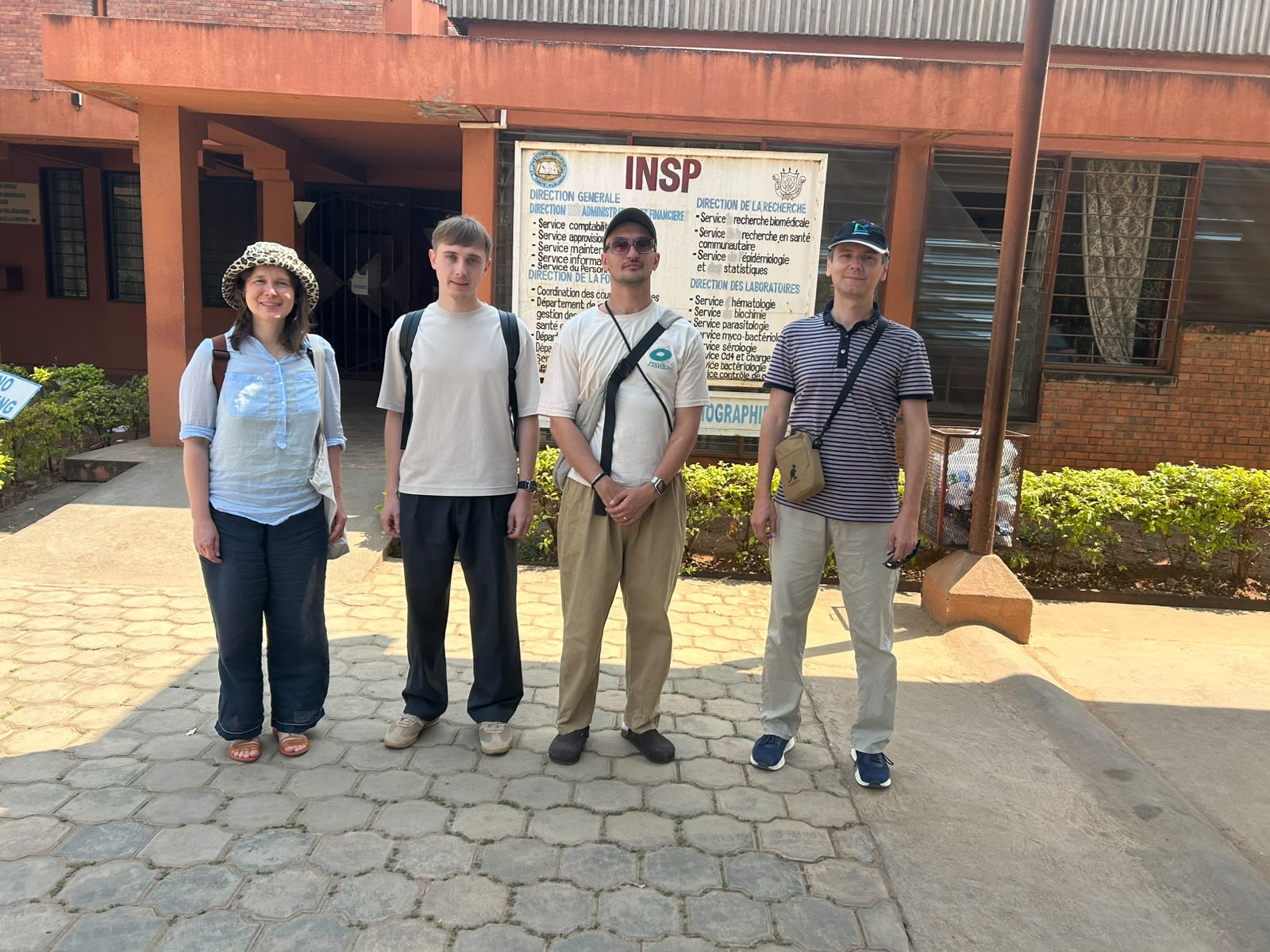
Institute staff visited the Republic of Burundi as part of their work on extraterritorial monitoring of infectious threats.
 |
26 08.2026
The purpose of the working visit was to conduct research to assess the prevalence of hepatotropic viruses in the Republic.
|
A working visit by a delegation consisting of staff from the I.N. Blokhina Novosibirsk Research Institute of Epidemiology and Microbiology (Rospotrebnadzor) and the Pasteur St. Petersburg Research Institute of Epidemiology and Microbiology (Rospotrebnadzor) to the National Institute of Public Health of the Ministry of Health of the Republic of Burundi (Institut National de Santé Publique) in Bujumbura took place from August 8 to 22, 2026. The delegation from our institute included A.A. Zalesskikh, Senior Researcher at the Laboratory of Viral Hepatitis Epidemiology, and N.A. Suslova, Junior Researcher at the Laboratory of Molecular Biology and Biotechnology.
The objective of this work was to conduct research within the framework of the "Extraterritorial Monitoring of Infectious Threats Based on the WHO Epidemic Response Center and the Network of Centers Abroad" section of the Federal Project "National Sanitary Shield - Health Security (Prevention, Detection, Response)" on the topic of "Serological and Molecular Genetic Monitoring of Hepatotropic Viruses in the Republic of Burundi."
The delegation analyzed epidemiological data, compiled clinical samples (blood serum) from the general population and patients with somatic pathologies who sought medical care at healthcare facilities in various provinces of the country, and tested the biological material for viral hepatitis markers using ELISA and PCR.
Conducting research on this topic will allow for an assessment of the prevalence of pathogens causing current infectious diseases and provide epidemiological and molecular genetic characterization of the studied pathogens circulating in the Republic of Burundi. This work will enable us to forecast the development of the epidemiological situation and assess the risk of importation of pathogens of current diseases in order to develop adequate preventive and anti-epidemic measures and make management decisions in the Russian Federation.
|
 |